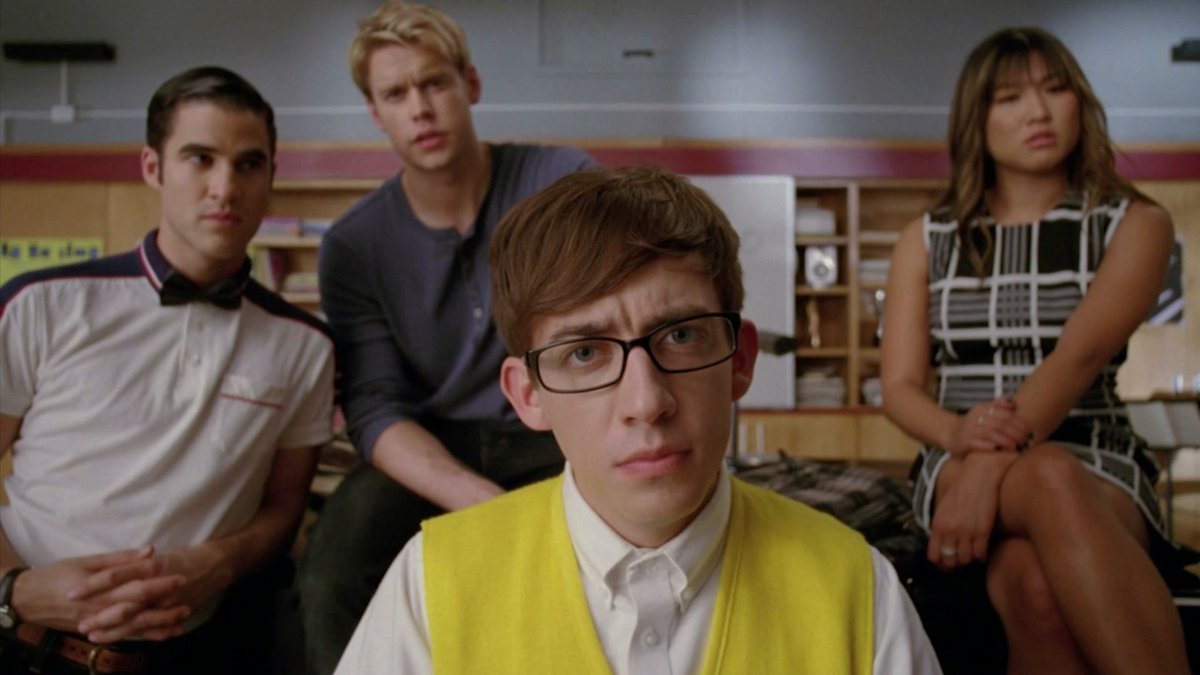
The final year in Lima and a turbulent transition to the Big Apple: Glee Season 5 arrived promising fresh starts and poignant goodbyes, yet its critical reception and the explosion of fan theories quickly revealed a more complex reality. Viewers tuned in, eager to see their beloved New Directions navigate life after high school, but many found themselves grappling with an unprecedented number of narrative shifts, character inconsistencies, and glaring continuity errors that left them scratching their heads.
This season wasn't just a chapter; it was a pivot point for Glee, marked by both heartbreaking farewells and ambitious new directions. But beyond the emotional arcs, a fascinating undercurrent of viewer engagement emerged: the collective effort to reconcile what was on screen with the established lore.
At a Glance: Key Takeaways from Glee Season 5
- Mixed Critical Reception: Season 5 faced significant scrutiny for its tonal shifts, pacing issues, and the handling of the show's move to New York.
- Emotional Highs & Lows: Finn Hudson's passing in "The Quarterback" was a universally praised, gut-wrenching tribute, while other plotlines felt rushed or disconnected.
- A Hotbed for Fan Theories: Inconsistencies and plot holes sparked a fervent fan community dedicated to explaining (or rationalizing) the show's narrative quirks.
- The Continuity Conundrum: From disappearing props to changing timelines, Season 5 was riddled with errors that often broke viewer immersion and fueled speculation about production challenges.
- Character Arc Divergences: Long-established character traits and backstories occasionally contradicted themselves, prompting debates about intentional development versus oversight.
- The "New York" Era: While offering a fresh dynamic, the splitting of the cast between Lima and New York sometimes led to uneven storytelling and character focus.
The Unpacking: Glee Season 5’s Tumultuous Journey
Glee Season 5 occupies a peculiar space in the series' legacy. It was a season of profound change, necessitated by the tragic passing of Cory Monteith, which the show handled with immense grace and raw emotion in "The Quarterback." This episode remains a highlight, universally lauded for its sensitive portrayal of grief. However, the rest of the season often struggled to maintain that narrative strength, grappling with the challenge of moving past such a monumental loss while simultaneously reinventing itself with a heavy focus on Rachel, Kurt, and Santana's lives in New York.
Critics and long-time fans observed a noticeable shift in the show's focus and quality. The initial Lima-centric episodes often felt disjointed, particularly with the introduction of new character dynamics and story arcs that sometimes seemed to abandon established plots. When the show fully transitioned to New York, it gained a new energy but also lost some of its ensemble charm. This narrative bifurcation led to a sense that the show was trying to be two different things at once, pleasing neither segment of its audience entirely. The ambition was clear, but the execution, many argued, was uneven.
This unevenness wasn't just a matter of subjective taste; it manifested in concrete ways, leading to a fascinating surge in fan engagement. When a show starts to present glaring logical gaps or character flip-flops, viewers, especially dedicated ones, don’t just walk away. They lean in, becoming amateur detectives, dissecting every scene for clues, attempting to fill in the blanks, or, in many cases, trying to explain away the numerous continuity errors that became a hallmark of the season.
Decoding the Narrative: Critical Reception Points
Season 5 began with "Love, Love, Love," an homage to The Beatles, which was met with cautious optimism. The music, as always, was a strong suit, but early signs of narrative disarray began to appear. Critics pointed to rapid-fire plot developments and character choices that felt unearned or contradictory to previous seasons.
For instance, the episode "A Katy or A Gaga" saw characters adopting pop star personas. While visually engaging, it introduced anachronisms, featuring songs released after the episode's depicted timeline. Such details, minor on their own, aggregated into a larger pattern that eroded viewer trust in the show's internal logic. This kind of disconnect often became a focal point in critical reviews, suggesting a lack of cohesive oversight.
The shift to New York in the latter half of the season was particularly divisive. While it allowed for deeper exploration of Rachel's Broadway dreams and Kurt's fashion aspirations, it sidelined many beloved Lima characters, leading to complaints about diminished screen time and underdevelopment for the remaining New Directions members. The narrative felt fragmented, with some critics suggesting the show had lost its way, unable to fully commit to either its high school roots or its ambitious metropolitan future.
Fan Theories: Explaining the Unexplainable
Where critics saw flaws, fans often saw opportunities for intricate theories. These theories weren't always about predicting future plot points; more often, they were elaborate attempts to rationalize the show's growing list of inconsistencies. If a character made a choice that felt out of character, a fan theory would emerge suggesting hidden motivations, secret backstories, or even an alternate universe.
One pervasive theory throughout Glee's run, often resurfacing in Season 5, was the "It's All a Dream" or "Artie's Screenplay" theory, which suggested the entire series was a product of a character's imagination or a script being written. This theory gained traction specifically when continuity errors piled up, as it offered a convenient (if meta) explanation for why things didn't always make sense. When characters like Ryder, who had explicitly stated his intention to leave New Directions, reappeared without explanation, the "dream" theory suddenly felt less far-fetched to some.
Another type of fan theory revolved around intentional subversion. Could Glee's writers be subtly commenting on pop culture, or even the show itself, by introducing these errors? For example, Kitty incorrectly stating The Beatles were from the 1940s could be interpreted as a character detail (she's not the brightest history student) rather than a writer's mistake. But when a phone disappears and a stuffed lion appears in Kitty's hand in the very same scene, it's harder to credit intentionality. This tension between "intentional character quirk" and "production error" became a lively debate among fans.
The show's fast-paced production schedule, characteristic of network television, likely contributed to these issues. With multiple episodes being filmed simultaneously and a massive cast, minute details could easily be overlooked. However, for dedicated viewers, these details mattered, forming cracks in the immersive narrative experience.
The Glaring Gaps: A Deep Dive into Season 5 Continuity Errors
Perhaps the most compelling aspect of Glee Season 5’s reception was the sheer volume of continuity errors and factual discrepancies. These weren't just minor blips; they were often noticeable changes in character knowledge, physical objects, or even the established timeline of the show. Let's break down some of the most prominent examples, exploring how they contributed to the season's complex critical reception and fueled fan speculation. To truly Explore Glee Season 5 with a critical eye, understanding these details is key.
"Love, Love, Love": A Rocky Start
The Beatles tribute episode, while musically strong, was a hotbed of minor continuity issues right from the start.
- Character Knowledge Gaps: Kitty's misattribution of The Beatles to the 1940s stands out. While possibly an intentional character quirk, it's contrasted by Blaine incorrectly stating Artie dumped Tina for faking a stutter (when Tina dumped Artie for Mike Chang) and then again falsely claiming Tina was dumped by both Artie and Mike. These suggest a collective amnesia about past plot points among the characters, or perhaps the writers.
- Vanishing & Reappearing Acts: Prop continuity suffered in this episode. Kitty's phone vanishes and a stuffed lion appears, then the phone reappears. Sam's backpack also plays hide-and-seek. Even the Warblers and a band behind Kurt on the stairs appear and disappear between shots, making scenes feel disjointed.
- The "Too Young To Be Bitter Club": Blaine mentions Tina attending a meeting alone, despite the club being disbanded after the Sadie Hawkins dance. These small details accumulate, creating a sense of a world that doesn't consistently remember its own rules.
- Ryder's Reappearance: Ryder, who explicitly stated he would leave New Directions after Regionals in "All or Nothing," is back without any explanation. This led to theories about off-screen reconciliation, though the show provided none.
"Tina in the Sky with Diamonds": Slushee Chaos
Tina's long-overdue moment in the spotlight was marred by several noticeable gaffes.
- Slushee Physics: The bucket's contents change from smooth and icy to thick and chunky mid-fall, defying logical consistency. More notably, the bucket was securely tied, making its "fall" onto Stoner Brett a significant plot hole.
- Sue Sylvester's Selective Memory: Sue claims she's never seen a black Cheerio, a statement easily contradicted by Mercedes Jones and multiple background extras. This type of error points to a potential lack of referencing the show's own history.
- Tina's Plagiarism (or Writer's Oversight): Tina attributes Rachel's iconic line, "Being a part of something special makes you special," to herself. Rachel actually said it in the pilot and repeats it in this very episode, making Tina's claim particularly jarring.
- Musical Missteps: During "Here Comes the Sun," guitar audio is heard even after Dani stops playing. Performers like Marley disappear mid-run or swap positions mid-song during "Sgt. Pepper's Lonely Hearts Club Band."
"The Quarterback": A Respectful Tribute, Still with Gaps
Even in an episode dedicated to honoring Finn Hudson, production errors occasionally crept in.
- Santana's Shifting Adornments: Santana's nail polish changes from unpainted to black between scenes, as do her earrings, appearing and disappearing within minutes of screen time. These details, while small, underscore the challenges of maintaining visual consistency in rapid production.
- Lip-Syncing Lapses: During "Seasons of Love," Sam is seen lip-syncing incorrect words, and during "If I Die Young," New Directions members are heard singing without their lips moving. These errors break the illusion of a live performance, a core element of Glee.
"A Katy or A Gaga" & "The End of Twerk": Anachronisms and Anatomy
These episodes brought new layers of chronological and physical inconsistencies.
- Anachronistic Anthems: "Applause" and "Roar" were released in August 2013, but "A Katy or A Gaga" is set in Spring 2013. Similarly, "Happy," "Wrecking Ball," and "Roar" were anachronistic in later episodes like "100." This often pulled viewers out of the narrative, reminding them they were watching a show rather than experiencing a cohesive timeline.
- Wardrobe Woes: Characters discussing the "Applause" performance immediately after wear different outfits than during the performance, a quick change that defies the narrative timeline.
- Vine's Infinite Loop: Bree's Vine video of Marley and Jake lasts longer than Vine's seven-second limit, a minor but amusing detail for those familiar with the platform.
- Underage Drinking: Kurt and Rachel, both under 21, are seen publicly drinking Limoncello in a tattoo parlor in New York, a clear breach of legal drinking age laws that felt particularly odd for the show's usually responsible protagonists. Rachel's bottle even reappears after she puts it in her bag.
- Sue's Math Fail: Sue incorrectly counts 9 teenagers twerking, despite Artie's inability to twerk and Unique's absence, among other numerical discrepancies.
"On Our Way" & "Puppet Master": Reflections and Recollections
These episodes continued the trend of visual and narrative inconsistencies.
- Camera Reflections: A camera is visibly reflected in the mirror Ryder stares at during "An Innocent Man," a classic production blunder.
- Sue's Shifting History: Sue's hair backstory changes fundamentally. In "The Power of Madonna," she claims short hair was due to a childhood accident; in "Puppet Master," she states it was a choice for a stricter look. This type of retconning can be frustrating for long-term fans invested in character backstories.
- Musical Mayhem: During "Nasty/Rhythm Nation," Bree uses her right hand to lift, then her left hand to slap Jake. Marley's hands change position repeatedly. These micro-errors are easy to miss but contribute to a sense of unpolished production.
"Previously Unaired Christmas": Temporal Troubles
Set out of order, this episode presented a range of chronological and visual errors.
- Timeline Tangles: The episode is set in Christmas 2012, but characters like Sam and Jordan sport their Season 5 hairstyles, which didn't exist in 2012. This kind of anachronism is a clear visual contradiction for eagle-eyed fans.
- Santana's Relationship Rewrite: Santana incorrectly states Brittany dumped her, when it was Santana who broke up with Brittany. This significant error regarding a core relationship arc stood out to many.
- The Vanishing Choir Room: The Choir Room was supposedly given to Sue after Sectionals, yet New Directions are still using it, implying a chronological inconsistency or a convenient lapse in memory for the plot.
- Disappearing Eggnog: Santana is about to drink eggnog, which then vanishes in the next shot.
"Frenemies" & "100": The Past Rewritten
As the show moved towards its 100th episode, the narrative's grip on its own past seemed to loosen further.
- Rachel's Memory Lapse: Rachel misremembers the "So Emotional" number as occurring "after graduation," when it was clearly before.
- Artie's Relapse Timeline: Tina and Artie contradict each other on how long after his re-walk his device broke – "the next day" versus "an hour later."
- Attendance Anomalies: Sue states Tina and Artie have perfect attendance, yet Tina was notably absent for "The Spanish Teacher."
- The "100th Lesson" vs. 74th Episode: Will celebrates the 100th lesson, but it's only the 74th episode. While this could be explained by off-screen lessons, it still felt like a statistical stretch.
- Mike Chang's Hair: Mike's hair constantly fluctuates between his current look and his old Season 1 look, a noticeable visual inconsistency for a returning character.
The New York Episodes: "New New York," "Bash," "Tested," "Opening Night," "The Back-Up Plan"
The shift to New York brought its own set of continuity challenges, particularly around character knowledge and logistics.
- Elliott's "A Great New World": Elliott misnames the band "A Great Big World" as "A Great New World," a small but noticeable gaffe for music fans.
- Rachel's Schedule Superpower: Rachel, famously unable to reschedule her showcase, somehow manages to attend Kurt's performance despite her own rehearsal, bending the rules of time and commitments for dramatic convenience.
- Sam's Hair Anomaly: In a flashback, Sam has short hair, despite having long hair at the time the scene supposedly takes place.
- Blaine's Memory Error: Blaine tells Kurt he asked him to move out, when he merely brought up the idea in "New New York." This subtle shift in dialogue alters the power dynamic of their conversation.
- The Disappearing Ring: Kurt's engagement ring disappears and reappears, and even changes style from the one he received. This is a significant prop error for a key relationship.
- Door Lock Debate: Rachel implies their apartment door has a lock, while Sue states there is no lock. A minor detail, but indicative of conflicting information within the script.
The Impact: How Continuity Errors Shaped Fan Experience
These continuity errors, while sometimes minor, collectively had a significant impact on the Glee viewing experience. For many, they chipped away at the suspension of disbelief, making it harder to get lost in the story. Every time a prop disappeared or a character forgot a crucial piece of their own history, it served as a jarring reminder that they were watching a crafted narrative, and one that wasn't always meticulously crafted.
This led to a dual effect on critical reception and fan engagement:
- Erosion of Trust: Critics often cited these inconsistencies as symptomatic of a broader decline in writing quality or narrative coherence. It suggested a lack of attention to detail that could detract from the emotional impact of otherwise strong storylines.
- Increased Fan Scrutiny and Theory Crafting: Rather than disengaging, many dedicated fans doubled down on their analysis. Forums and social media exploded with discussions dissecting every frame, pointing out every error, and proposing elaborate explanations. These theories, as mentioned, ranged from meta-commentary on the show's nature to more straightforward attempts to fill in logical gaps. This inadvertently fostered a deeper, albeit different, kind of engagement with the series.
The errors also highlighted the logistical challenges of producing a show like Glee. With a large ensemble, numerous musical numbers requiring complex choreography and staging, and a tight production schedule, mistakes were bound to happen. However, the sheer volume in Season 5 suggested a potential strain on the production teams or a shifting priority away from meticulous narrative consistency.
Beyond the Errors: Lingering Questions & Lasting Impressions
So, what does this all mean for Glee Season 5? Was it a failure because of its flaws? Not entirely. The season still delivered powerful emotional moments, particularly around Finn's tribute. It pushed boundaries by taking its characters to new environments and exploring mature themes.
However, the enduring legacy of Season 5 is intertwined with its inconsistencies. It serves as a fascinating case study in how production challenges can manifest on screen and how an engaged fanbase can react—not just with criticism, but with creative problem-solving and theory-crafting. For those who stuck with the show, Season 5 was a bumpy but memorable ride, a testament to the fact that even with its imperfections, Glee still held a powerful grip on its audience.
Understanding these critical receptions and fan theories, especially in light of the prolific continuity errors, offers a richer, more nuanced perspective on a season that dared to reinvent itself under challenging circumstances. It’s a reminder that sometimes, the most engaging narratives aren't always the most flawless ones; they're the ones that spark conversation, debate, and the collective desire to make sense of a beloved, if imperfect, world.